
 English
 Español
 Deutsch
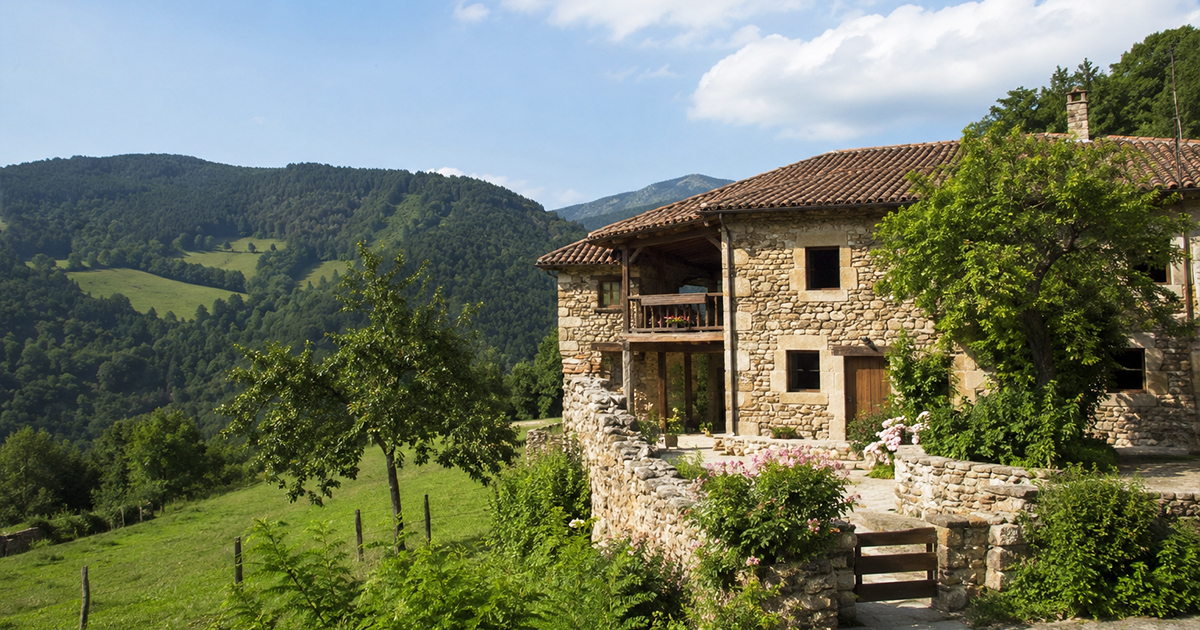
For some years now, buying a home in rural areas has been a good alternative for many people. What began as a quest to disconnect has transformed into a strategic market for highly diverse profiles: from investors and families to digital nomads and remote workers.
Evolution of the real estate market
The rural housing market has evolved toward the specialization of unique properties. Today, it is possible to find locations with high scenic and heritage value that host a wide variety of housing: from renovated historic buildings and country houses with large grounds, to modern homes fully integrated into nature.
On the other hand, geographic dependence on large cities has decreased drastically thanks to digital connectivity. The profile of the buyer has changed: people are no longer just looking for a second summer residence, but for the possibility of living permanently, for extended stays, or during hybrid seasons adapted to the work schedule.
In this new scenario, the most valued homes are those with space, privacy, and a good internet connection, becoming ideal environments to foster concentration, creativity, and personal balance.
The rural housing market has specialized in unique properties. This results in locations with high scenic and heritage value.
In addition, there is a wide variety of housing: renovated buildings, houses with large grounds, or modern homes.
Advantages of buying homes in rural areas
nvesting in homes in rural areas offers a perfect balance between financial profitability and personal well-being:
Investment with potential for appreciation and diversification
Demand in rural areas is growing more and more, so buying this type of housing offers some room for appreciation in the medium and long term. Furthermore, diversifying heritage by including rural areas is an excellent strategy.
Quality of life and privacy
Living in rural areas offers benefits that the city does not, such as natural environments, lower population and relaxation. Privacy and contact with nature become an everyday luxury, especially valued by families, professionals and those who prioritize physical and emotional well-being.
Spacious rooms and homes with their own soul
The market includes properties with unique features and diverse customization options. Some examples are stately homes, historic farmhouses, country estates or manor houses; properties with soul and legacy whose restoration not only increases its market value, but also provides an emotional component and gives it its own identity.
Second home with the possibility of tourist rental
Another option is to combine private use of the rural house with seasonal rental, which generates income but allows you to personally enjoy the property. This formula allows for stable and growing profitability, as well as the demand for accommodations with their own identity.
Incentives and aid for the rural buyer
Currently, state and regional regulations offer a very favorable financial ecosystem to promote habitability in these areas:
Reduced purchase taxes
Many Autonomous Communities offer reduced rates for the Property Transfer Tax (ITP) and Stamp Duty (AJD) for the acquisition of homes in municipalities at risk of depopulation or low population density, drastically reducing initial purchase expenses.
Deductions on your income tax return (IRPF)
There are significant regional tax deductions for the purchase or renovation of what will become your primary residence in rural areas. Furthermore, if you are self-employed or relocate your economic activity to a rural environment, you can access specific start-up deductions.
Tax profitability on rentals
If you decide to combine personal use with holiday or seasonal rental, the law allows you to deduct maintenance, repair, utility, and depreciation expenses, optimizing the net return on your investment.
Grants and Subsidies from the “State Housing Plan”
These are direct grants for purchasing a home in municipalities with fewer than 10,000 inhabitants, aimed at young people under 35 years old. They can reach up to €10,800, with a limit of 20% of the purchase price.
Key aspects to consider before buying in rural areas
If all this convinces you and you want to acquire a property in a rural area, you should take into account some considerations before making the decision. To ensure your investment is safe and to avoid unpleasant surprises, it is important to analyze some practical, legal and technical elements that may condition the use of the property or its profitability.
Accessibility, connectivity and basic services
Beyond the idyllic landscape and tranquility of the rural area, access to infrastructure must also be considered, depending on the intended use of the property. Among the most important things are the existence of roads in good condition, proximity to centers with health or educational services, and the availability of high-speed internet connection (fiber optic or satellite) if you plan to work remotely.
Land use and urban planning regulations
This is the most complex legal point. Before buying a rural property, it is essential to know whether it sits on urban, developable or rustic land, as well as the building or expansion limitations set out in the current municipal planning regulations and framed within the urban planning regulations of the corresponding autonomous community. A mistake here could prevent a renovation or result in demolition penalties.
Condition of the property and renovation needs/costs
Many rural homes require full or partial rehabilitation, or energy efficiency upgrades. It is vital to conduct a prior structural assessment of the facilities and roofs to estimate a realistic budget and avoid unexpected cost overruns.
Conclusion
The demand for housing in rural areas has increased recently. This is due to the rise of remote work, the availability of seasonal rentals, and the potential for generating income from selling the property, in addition to unprecedented tax incentives. However, while buying a home in a rural area has many advantages, the complexity of local zoning laws and the disparity of regional tax regulations demand a rigorously preventive analysis.
Want to make the most of these tax advantages?
Bonuses and requirements (such as age limits, municipal population size, or residency registration deadlines) vary substantially depending on the Autonomous Community. At FIRMALEX, we help you plan your purchase to maximize tax savings and guarantee a secure transaction, accompanying you from the review of the earnest money contract to the signing of the public deed.
Further information
This article is part of our service Real Estate Lawyer in Spain. Visit this section where you will find all the useful information on this topic, including a complete guide on How to buy a house in Spain.
Do you still have some questions? Contact us today for personalized advice
✅ Our staff speaks fluent Spanish, Valencian, English, and German, so you can communicate with us in your own language and have your questions clearly resolved. We’ll be happy to assist you.
📍 Denia – Plaza del Convento, 6 – Mezzanine floor door B
📍 Valencia – Calle Creu Roja, 1 – Block 6, Floor 1, door 10 (* only by appointment)
✉📞 Contact: info@firmalex.com – Tel. +34 966 421 416 – Whatsapp +34 622 497 615